Singapore’s Lost Son: How I made it from dropout to millionaire Princeton PhD.
Kaiwen Leong with Edward Choi and Elaine Leong
The book
Kaiwen Leong was abused as a child. At sixteen he went through four junior colleges in six months, dropped out, and was branded too “subnormal” for books.
A relief teacher helped him stand again. He studied alone for his A-levels as a private candidate, passed every subject, and won a place at Boston University.
He made his first million investing, earned a PhD in economics at Princeton University, and came home to Singapore to work and teach. This is that road, told in his own words.
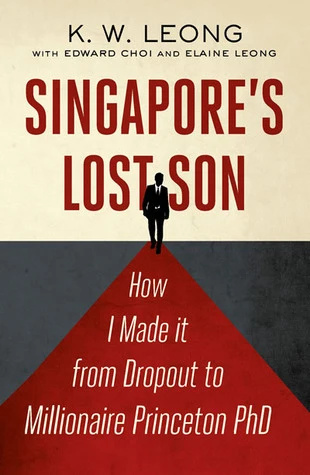
Vietnamese edition, 2015
Praise
“Part memoir, part parable, this book speaks of the importance of self-reliance and determination, as well as compassion and friendship.”
“Singapore’s Lost Son is an amazing memoire, filled with unforgettable episodes and told in prose that is at once simple and compelling. This is a remarkable tale of courage and perseverance.”
“This story is remarkable.”
“Kaiwen has an interesting story to tell about how he had overcome struggles in his life to become the success story that he is today.”
“It is an amazing story of willpower by an amazing man.”
“An example of success created out of a clear goal and sheer grit. Many lessons for our young to learn.”
From the 18 endorsements printed in the book, with each endorser’s position as printed at publication.
The journey
-
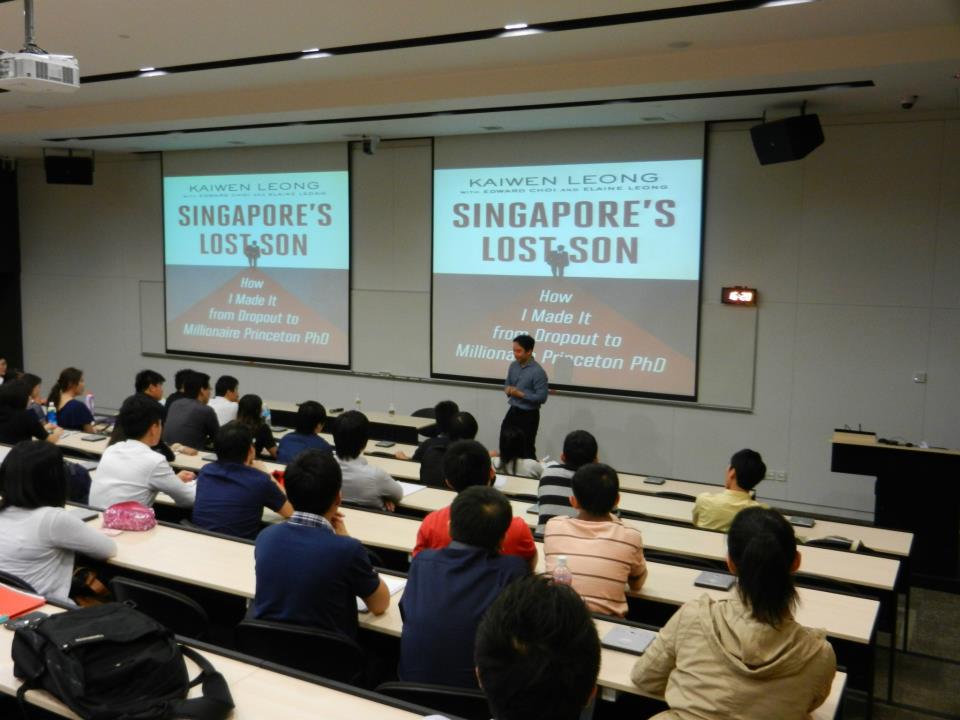
Years later, the boy they wrote off filled a lecture theatre. Four junior colleges
in six months“I was a dropout. I was branded too ‘subnormal’ for books.”
Kaiwen Leong, Singapore’s Lost Son, introduction
-
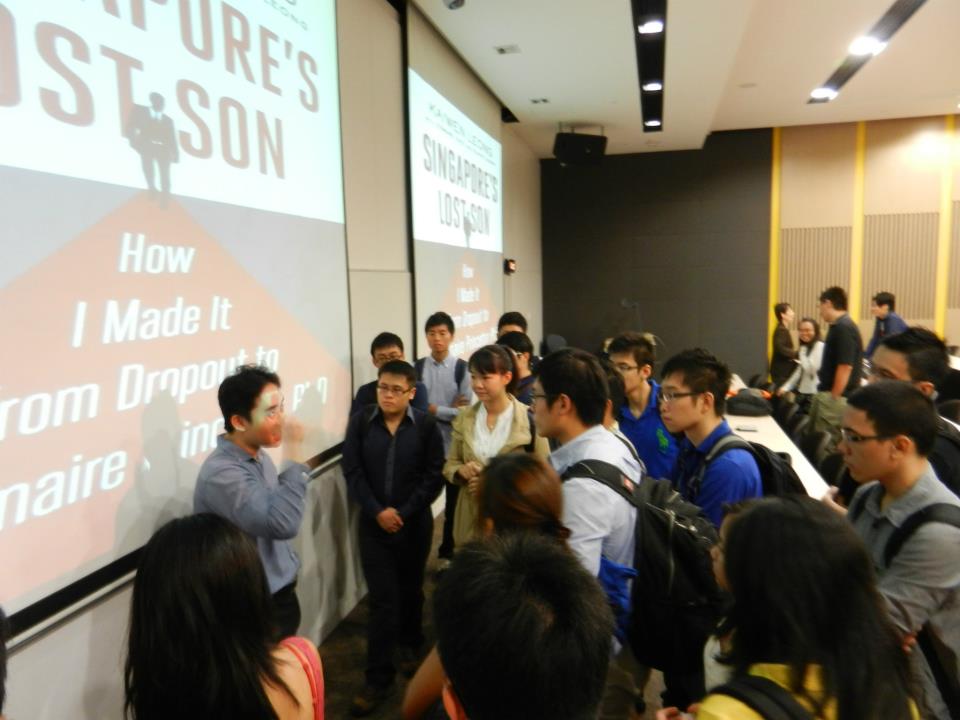
The help he once got, now passed on to students. A teacher helped
him stand again“You are loud and arrogant, but this is not strength. True strength is quiet strength.”
A relief teacher’s words, as he recalled them to The Straits Times, 20 October 2012
-
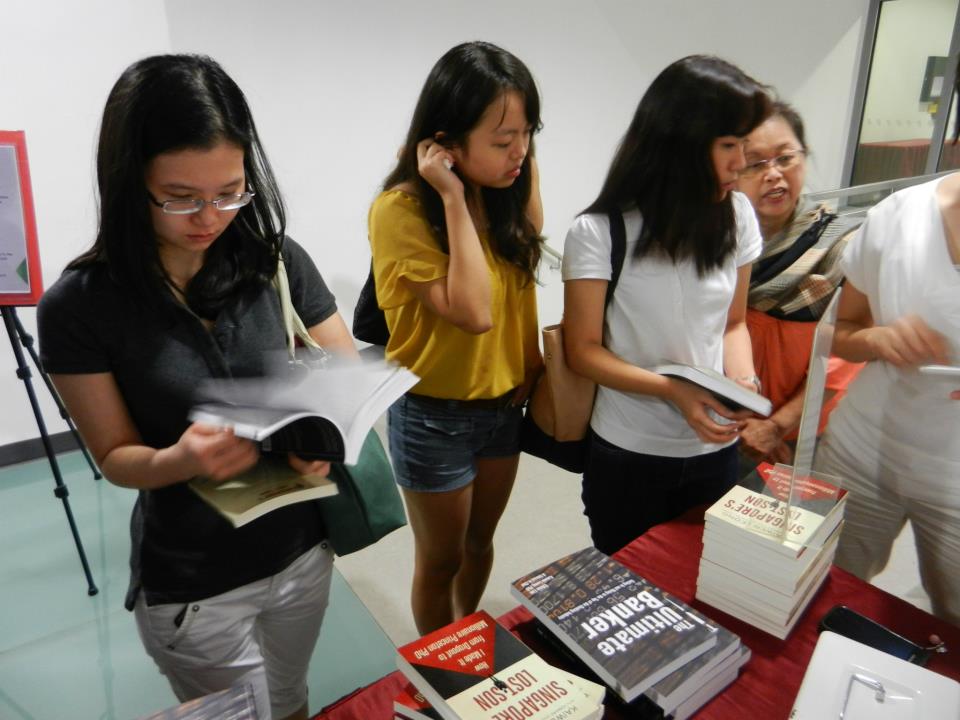
Students reading how he made his own options. A-levels alone,
then Boston“When all my options seemed to have run out, the solution was simple — I made my own options.”
Kaiwen Leong, Singapore’s Lost Son, chapter 1
-
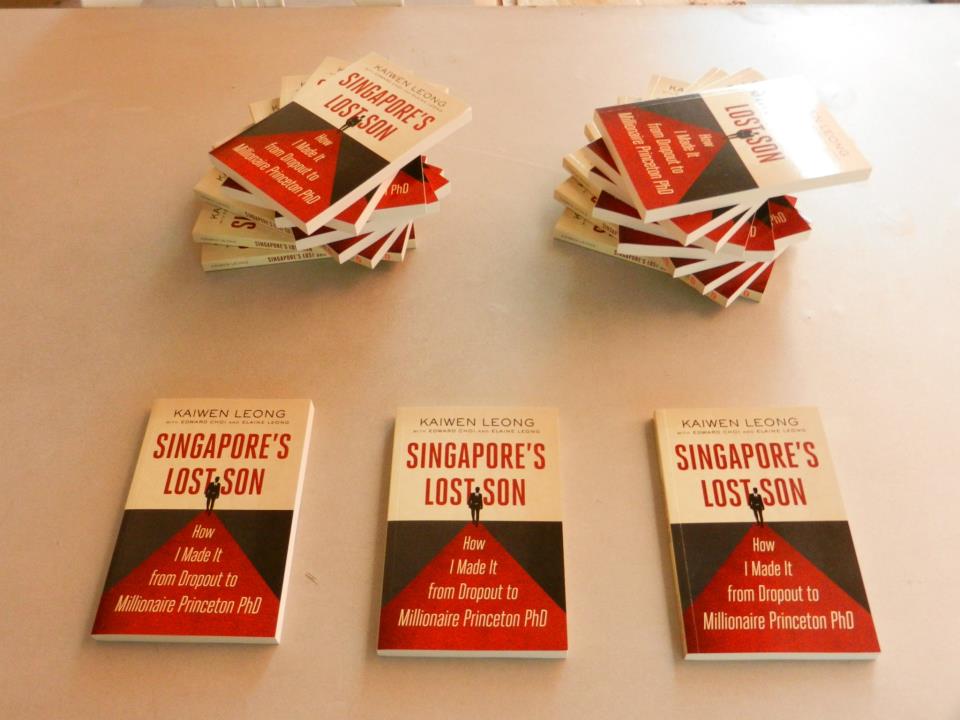
Every copy, a story of never giving up. One boiled potato
a dayIn Boston, with his parents facing bankruptcy, he lived on a single boiled potato a day, and graduated in four years with degrees in economics and mathematics.
The Straits Times, 20 October 2012; Singapore’s Lost Son, introduction
-
Home at last, helping the next generation find their way. Princeton, then
the long road home“At last, I could return home to serve. I was no longer a lost son.”
Kaiwen Leong, quoted in The Straits Times, 20 October 2012
Inside the book
(in four parts)-
Part No. 1
Lost in Singapore
Chapters 1–7
It opens with “Secret Option C”, his name for making your own options when the usual ones have run out.
Then come the early years, from the abuse he suffered and four junior colleges to chapter 6, “A helping hand: how a teacher helped me stand again”.
-
Part No. 2
Found in Boston
Chapters 8–23
Sixteen chapters, more than half the total, set in Boston.
Among them: “Mastering a foreign language on a budget”, “Extreme starvation”, “100 scholarships, 99 rejections, 1 success” and “Redemption through a mother’s tears”.
-
Part No. 3
Taking the lead in Princeton
Chapters 24–28
Five chapters on service and leadership, opening with “Princeton: in the nation’s service and in the service of all nations”.
They include “Passing it forward: saving a life” and close with “Guiding the future of Singapore”.
-
Part No. 4
Reborn in Singapore
Chapters 29–31
Three chapters bring him home: “The long road home”, “The value of nothing” and “Home at last: a lost son’s return”.
An epilogue follows. Throughout, chapters pair episodes from his life with short lessons he calls Secret Option C.
The authors
Kaiwen Leong
How it was made
“How come everybody doesn’t know about this?”
-
2009
Late one night, in the basement of Fisher Hall at Princeton University, Edward Choi got talking with Kaiwen Leong. Over many more conversations, Kaiwen told him about his past.
Edward wrote three short pieces about what he had heard. Then he asked Kaiwen to write a book with him. Kaiwen was unsure at first. After reading the pieces, he said yes.
-
A year later
In Witherspoon Hall, Elaine Leong mentioned that she liked to write. Kaiwen asked her to join them, and she agreed.
-
Two years of drafts
The three of them wrote the chapters and passed edits back and forth by email. Each chapter was rewritten several times, so the book would speak in one voice. They contacted more than 40 publishers in Asia and the United States, and rewrote again after each round of feedback.
-
2011
Marshall Cavendish, in Singapore, agreed to publish it.
-
Back at Princeton University
Edward and Elaine took the manuscript to President Shirley Tilghman, Provost Christopher Eisgruber and former trustee Shelby Davis. Their words are among the endorsements printed in the book.
-
28 September 2012
The book came out in Singapore. Talks followed, in school halls, libraries and lecture theatres.
-
2015
A Vietnamese edition was published, as Đứa con lưu lạc của Singapore.
From reports in The Daily Princetonian and Princeton Alumni Weekly, October 2012.
About the book
Synopsis
“This is the true story of a boy with a simple dream—to become a man. But he fell and became a dropout of school, friends, life, himself.” So the publisher introduces the book.
Told in Kaiwen Leong’s own voice, it begins with the sexual abuse he suffered as a boy and his years of being written off at school. It goes on to his A-levels as a private candidate, hunger and study in Boston, a first million made investing, a PhD in economics at Princeton University, and his return to Singapore.
Two principles, he writes, guided him: “staying positive and staying committed to my dreams.” The chapters pair episodes from his life with short lessons he calls Secret Option C.
Professor Euston Quah, then head of economics at Nanyang Technological University, wrote the foreword. Some names in the book have been changed to protect identities.
Book details
- Title
- Singapore’s Lost Son: How I Made It from Dropout to Millionaire Princeton PhD
- By
- Kaiwen Leong with Edward Choi and Elaine Leong
- Foreword
- Professor Euston Quah
- Publisher
- Marshall Cavendish Editions, Singapore
- Published
- September 2012 (the copyright page gives 2013)
- Paperback
- 199 pages, 200 × 133 mm
ISBN 978-981-4382-68-7 - Ebook
- EPUB, released 1 October 2012
ISBN 978-981-4408-88-2 - Contents
- Foreword, introduction, 31 chapters in four parts, and an epilogue
- Cover art
- Cover Kitchen Co Ltd
- Translation
- Vietnamese, as Đứa con lưu lạc của Singapore (Phụ nữ and TGM Books, 2015), translated by Uông Xuân Vy and Vi Thảo Nguyên
- Recognition
- Nominated for the POPULAR Readers’ Choice Awards 2013, English (Adult)
In the press
“The core of the book is a fascinating account of how by ‘blind determination’ Leong surmounted the many obstacles in his path.”
- Princeton Alumni Weekly · 10 October 2012After Publishing her First Book, Leong ’13 Begins Senior ThesisEric Silberman
- The Daily Princetonian · October 2012Leong ’13 and Choi ’14 write book about graduate alumnus
- The Straits Times · 20 October 2012From abuse victim to millionaire academicBryna Sim · NewspaperSG record
- VnExpress, in Vietnamese · 24 October 2012Từ cậu bé bị lạm dụng tình dục đến đỉnh cao danh vọngAnh Ngọc · archived copy
- HEY!, Nanyang Technological University · November–December 2012From nothing to stunningInterview by Mabel Lee · PDF, pages 32–33
- Hai Sing Pao, in Chinese · 2 December 2012人助我,我助人Column by 仿雷 · PDF, page 7
- South China Morning Post · February 2013Book review: Singapore’s Lost Son, by Kaiwen Leong
Talks
After publication the authors spoke about the book in Singapore and at Princeton University. Talks listed on the Princeton Mind website included a career workshop at SIM Global Education (October 2012), a book talk at Nanyang Technological University Libraries (January 2013) and a conversation at The Arts House.
At Princeton University, Elaine Leong spoke about writing the book at “Published at Princeton”, a Nassau Literary Review event, in autumn 2012. The photographs below come from talks and signings in 2012 and 2013.
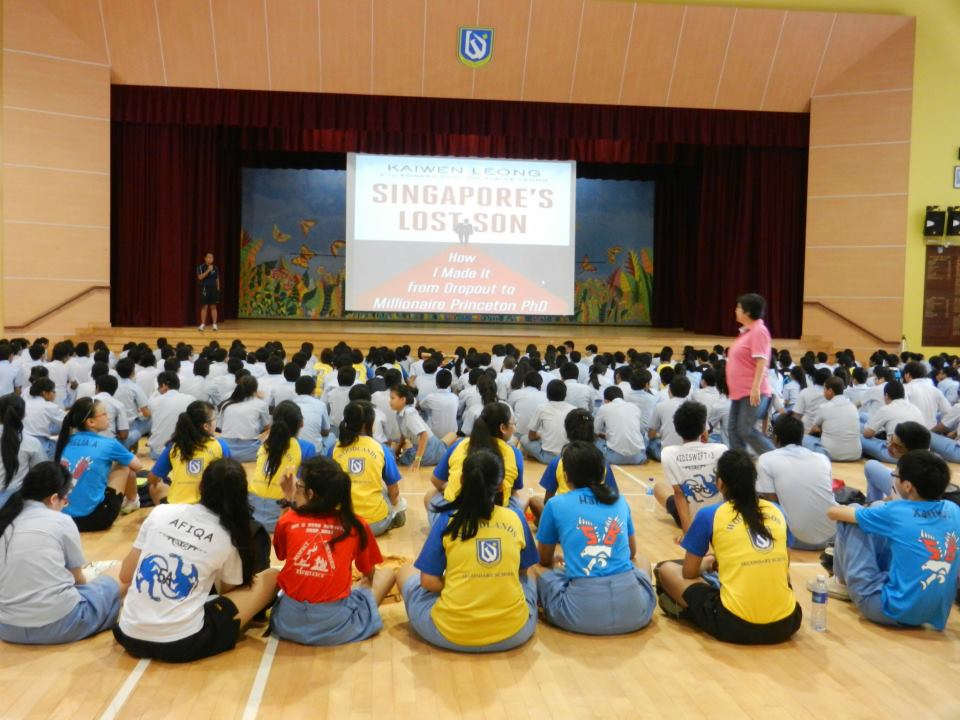
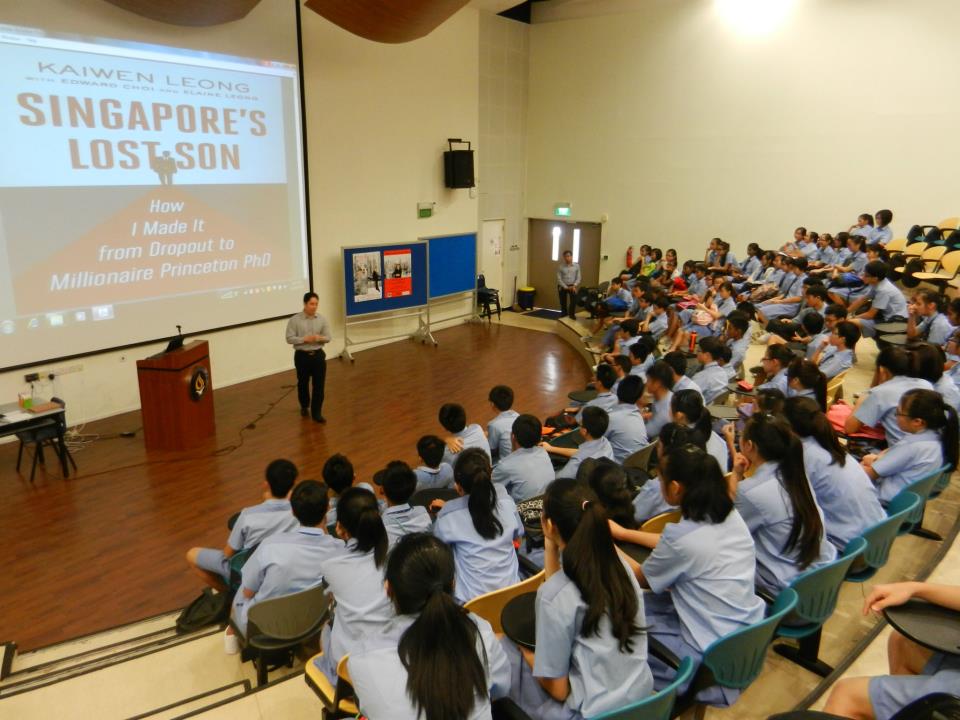
School hallRow after row of students, there to hear how a dropout found his way. 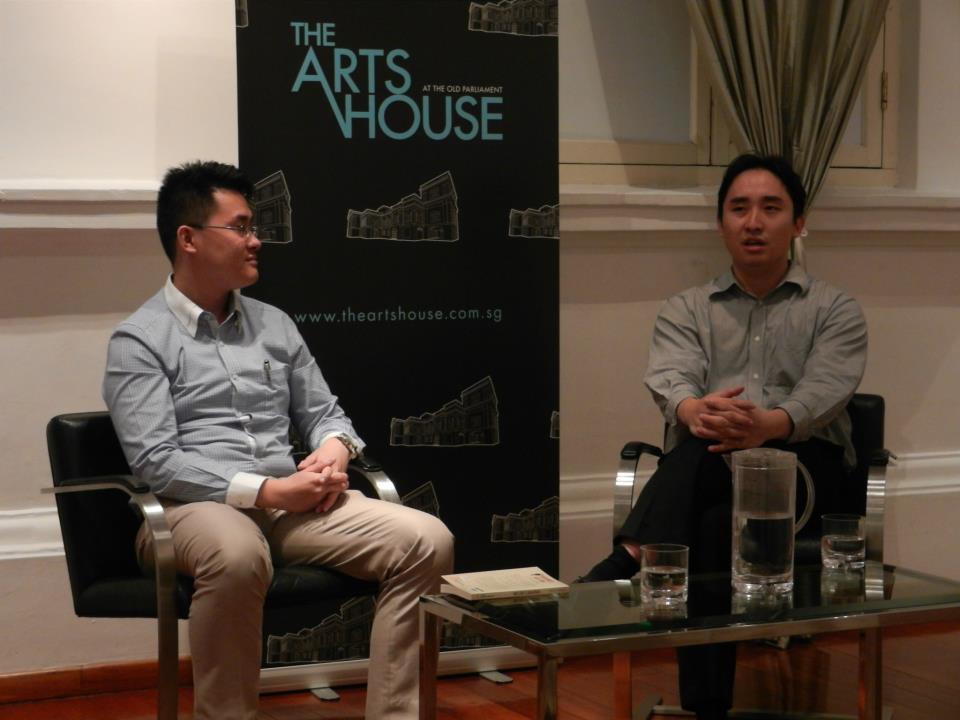
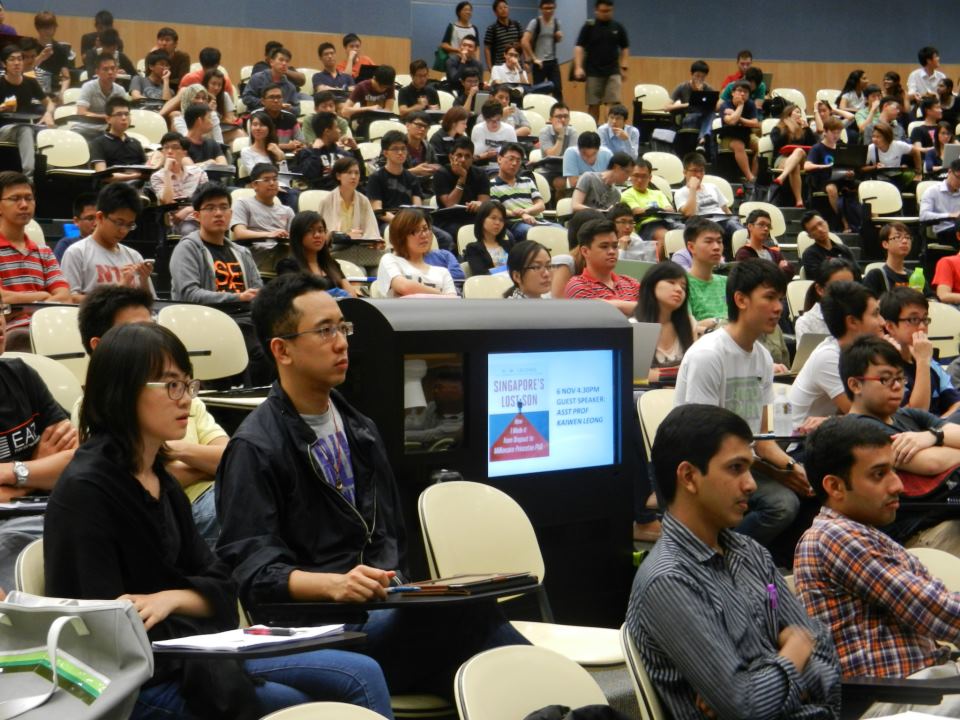
The Arts HouseTalking about the book, and the second chances behind it. After the talkStudents lingered, wanting to hear more. Lecture theatreEvery seat taken, for a story of falling down and getting back up. 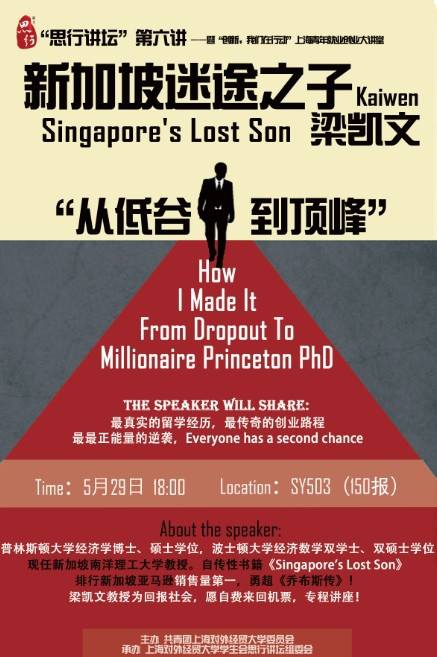
Poster“Everyone has a second chance,” it promised, in English and Chinese. 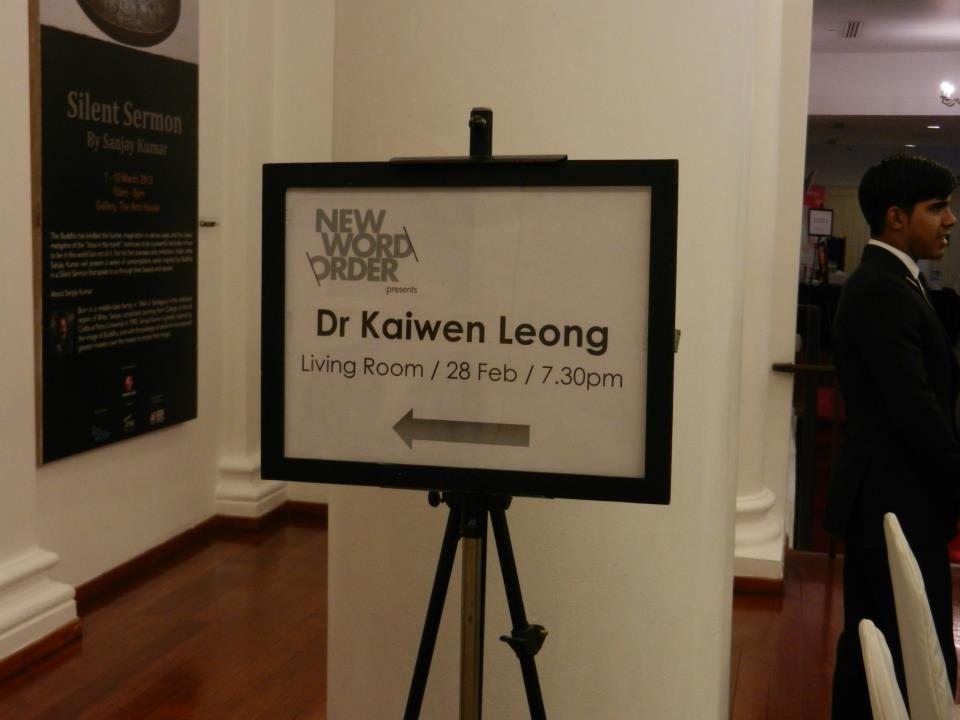
Living RoomThe sign that pointed the way to an evening with Kaiwen. 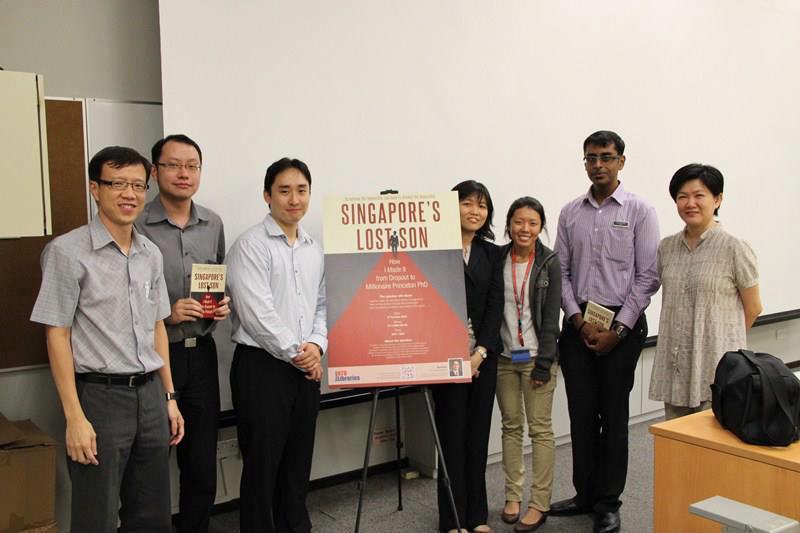
With the standeeNew readers, copies in hand and all smiles. Book tableSo caught up, they started reading on the spot. 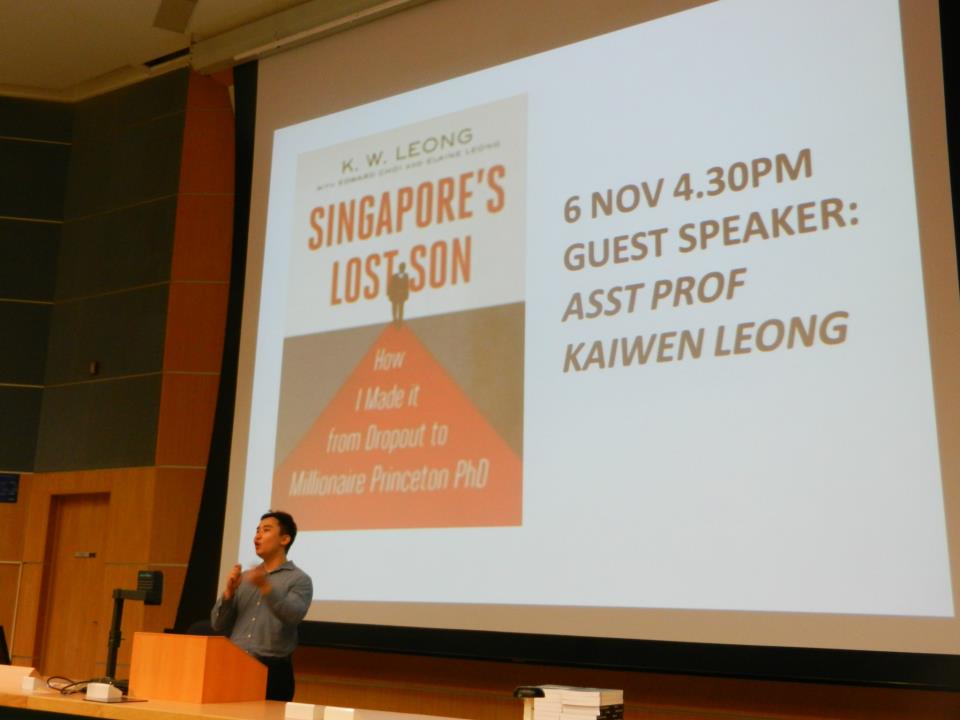
Guest speakerOnce written off at school, now the one at the front of the room. CopiesStacks of fresh books, ready to find their readers. School auditoriumKaiwen encouraging students to believe in themselves and to never quit. 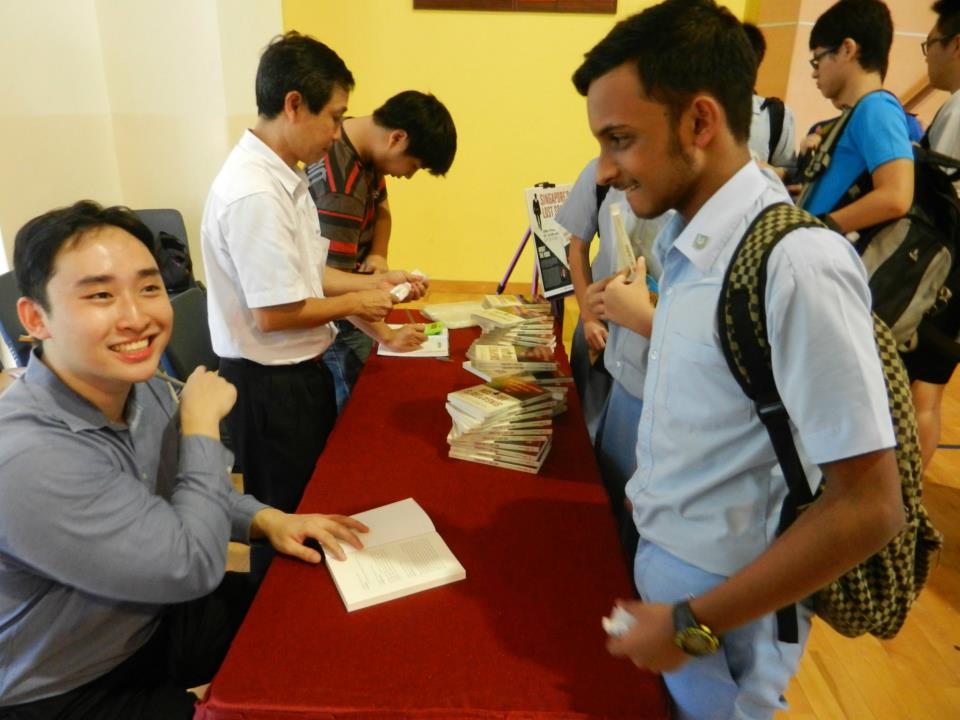
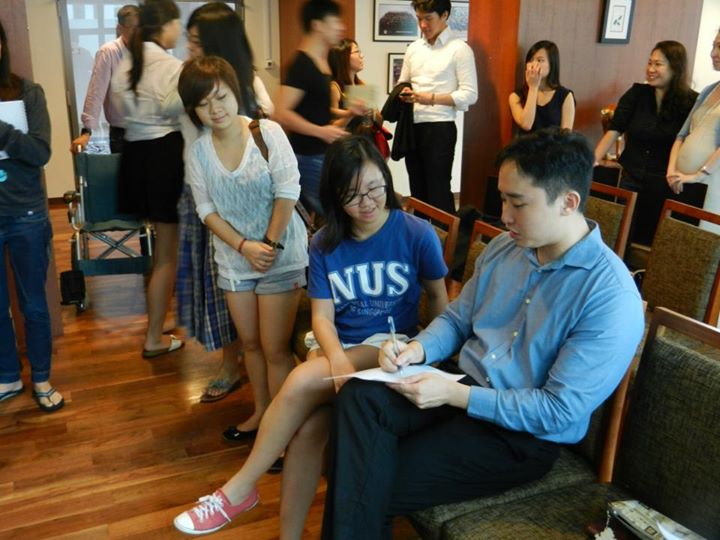
Signing tableWaiting their turn for a few words of encouragement. Twin screensA room full of students, hearing it’s never too late to start again. 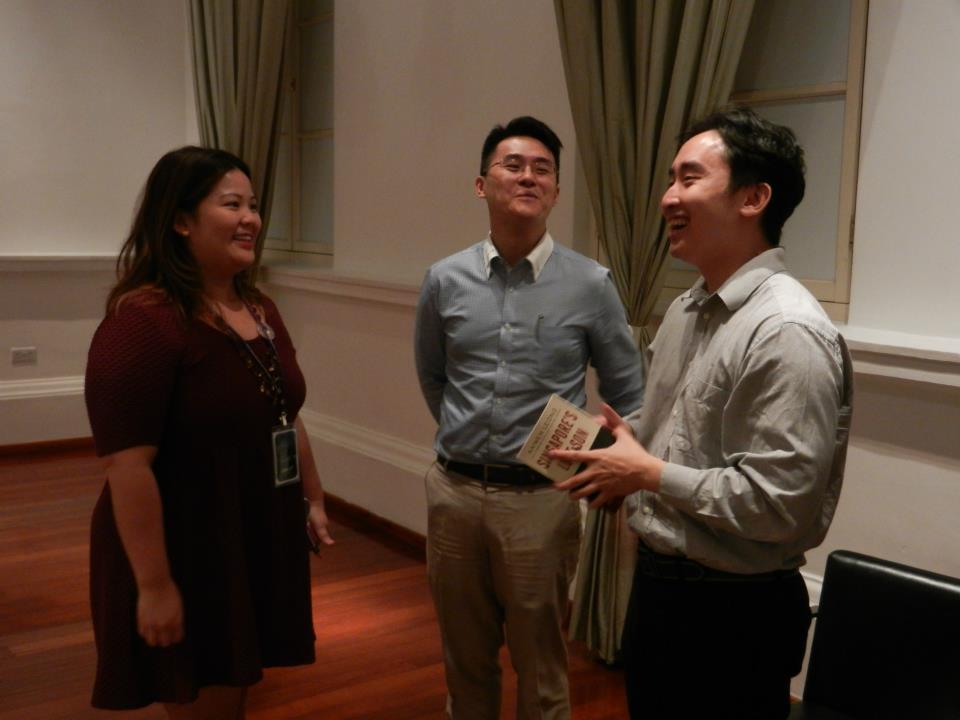
After the eventLaughing and talking it over, book in hand. SigningA long queue of students, each waiting to meet Kaiwen.
Where to read it
- Read the openingThe publisher’s free sampleForeword, introduction and chapters 1–3
- Borrow the ebookNational Library Board, SingaporeNeeds an NLB account
- Find it in a libraryLibrary of Congress record · Princeton University Library record · WorldCat (ebook)
- Vietnamese editionĐứa con lưu lạc của Singapore · GoodreadsGeneral Sciences Library of Ho Chi Minh City record, and the edition’s Goodreads page